

effulge creative

photography by Joseph K Cowdell

Author: effulge

  • Introspection – Self Portraits

    Introspection – Self Portraits

    6. Introspection

    Now it’s time to make your first self-portraits. In some ways, this will be easier than your previous portraiture assignment, and in some, it will be harder. Part of the challenge will come into play as you attempt to assess what will express your own personality to others. It’s time to think outside of your own perceptions and be candid with yourself about what makes you tick and how you come across to others – especially how to express that visually to complete strangers who may view the photograph. Again, as with your previous portraiture assignment, this process may be augmented through clothing, props, surroundings, lighting, posing, expression, etc., but at its core, these should be portraits of your true, inner self as you believe that should best be expressed. The final product should be five different portraits taken on five different days (The portraits should have different lighting, setting, prop, wardrobe, etc. Don’t just move from one room to the next. You’ll be graded on your effort as well as your image and presentation).

    Tip: Dare to be vulnerable. Tell us something about you that we don’t know.

    This assignment is for Digital Photography course (ART 2060) at Dixie State University in St. George, Utah taught by Alex Chamberlain in the Fall of 2015.
  • The Long Way Home – Intro to Night Photography

    The Long Way Home – Intro to Night Photography

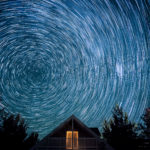
    I took a photography course from Alex Chamberlain at Dixie State University in the Fall of 2015. This was my first “real” experience with night photography. Luckily, the city of Pine Valley, Utah has some of the darkest skies near my hometown of St. George, Utah. It is the perfect spot for me to practice my night photography. Night photography gives me an excuse to get away from it all and just listen to nature. Sometimes being alone with just a camera can be frightening, so I usually bring a friend.

    5. The Long Way Home – Intro to Night Photography

    Your assignment is to shoot 10 long exposures, ranging from 1 second to at least 10 minutes in length. Subject matter should include all of the following:

    1. Moving lights
    2. Stars
    3. People

    This does not mean that all three elements must be in each image. Rather, you need images of all three of these things within the set you turn in.

    Exposure lengths should be:

    • 2 finished 1-second exposures
    • 2 finished 5-second exposures
    • 2 finished 10-second exposures
    • 2 finished 30-second exposures
    • 2 finished 10-minute exposures (these can be longer than 10 minutes if you’d like)

    These should not be “drafts” or experiments. They should be finished, portfolio-quality pieces. The finished assignment calls for 10 images. You will probably need to take much more than that in the course of creating your images.

    In order to expose longer than 30 seconds, most cameras must be in “bulb” mode, which means you press the shutter button to open the shutter and release it to close. Obviously, this can introduce some hand-transferred camera shake, so you will probably want to pick up a remote shutter release for your camera. These can be purchased from amazon.com for about $5-$10.

    Note: October 13th is the new moon (the moon is not visible in the sky). That will be the best star-shooting day during the course of the assignment, but you should be able to find good shooting conditions within four days before or after that date.

    Please don’t trespass or go anywhere crazy alone at night.

    Your moving light shots cannot be taken around the Dixie Rock area.

    Hint: You can check the clear night skies forecast here: http://www.cleardarksky.com/csk/

    Hint 2: Here is a list of common “correct” exposure settings for common apertures while taking night sky shots:

    • f/1.4, ISO800 = 30s
    • f/2.8, ISO3200 = 30s
    • f/4.0, ISO6400 = 30s
    • f/5.6, ISO12800 = 30s

    Hint 3: Make sure your batteries are fully charged.

    This assignment is for Digital Photography course (ART 2060) at Dixie State University in St. George, Utah taught by Alex Chamberlain in the Fall of 2015.
  • Pets and Portraits

    Pets and Portraits

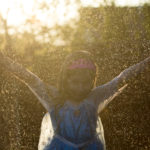
    The young woman in this set is my cousin, Melanie House, and she recently found out she has breast cancer. She just had chemotherapy and got herself a new wig. My wife helped her with makeup for this photo shoot.

    Update 2017: Melanie is in remission, cancer free, and happy to be alive!

    4. Pets and Portraits Requirements

    1. You are to shoot a portrait of a friend or family member that explains and/or highlights an aspect of their personality that you find interesting. This can be shown via a prop, clothing, facial expression, surroundings, lighting, posing, or any other way you can creatively pull it off.

    2. You are also to shoot a portrait of a pet or animal (wild or domestic, your choice, but be safe). The portrait should tell about the animal through imagery rather than just showing the animal. (I.E. including some surroundings or a food source could tell you about a wild animal’s habits)

    Lighting for the human must be artificial. It is a major part of your grade for this assignment, so make sure it’s well-executed and done on purpose. Also, don’t do anything with your lights that will spook a dangerous animal (I.E. using flash bulbs close to a horse. . . seriously.)

    This assignment is for Digital Photography course (ART 2060) at Dixie State University in St. George, Utah taught by Alex Chamberlain in the Fall of 2015.
  • Composition – The Good, The Bad, & The Ugly

    Composition – The Good, The Bad, & The Ugly

    3. The Good, The Bad, & The Ugly Requirements

    After our composition discussion, you should be able to filter the content of your images more effectively and arrange things to be more pleasing and emphasize your choices. Further, our exposure discussion should give you the tools you’ll need to grade your images effectively to emphasize the subjects of your choosing.

    For this assignment, you’ll need to choose an interesting or unusual outdoor subject such as an old car, a barn, or anything that can stand out in its environment. It can be anything, as long as you can isolate it in a pleasing compositional manner.

    Take 5 images with poor composition and good exposure. Take 5 more images with good composition and good exposure. Be prepared to explain why the poor composition is poor and why you consider the good compositions to be good. Don’t take the easy way out. Find a subject you can frame and compose well.

    This assignment is for Digital Photography course (ART 2060) at Dixie State University in St. George, Utah taught by Alex Chamberlain in the Fall of 2015.

  • Movement – Shutter Speed & Aperture

    Movement – Shutter Speed & Aperture

    2. Movement – Shutter Speed & Aperture Requirements

    Shutter Speed and Aperture both play a crucial role in the “look” or aesthetics of your image. Your camera’s Program and Auto modes can properly expose an image, but they will NOT allow you to control how your camera treats motion, or your depth of field; both crucial elements to making an image look the way you want. This is one of the primary practices that separates a professional photographer from the family snapshot jockey.

    1. Subject one must be flowing water.
    2. 2. A machine with moving parts (in motion).

    Subject one (Must be moving water): Using your camera’s shutter priority (Tv or S) mode, take shots of your subject at different shutter speeds (at least 5 shots) and observe the difference in the images. At least one of these shots should have a shutter speed slower than 1/10 of a second.

    Subject two: (Machine with moving parts) Move close to your subject, and zoom in. Using your camera’s aperture priority (Av or A) mode, take shots of your subject at different aperture values (at least 5 shots) and observe the difference in the images.

    This assignment is for Digital Photography course (ART 2060) at Dixie State University in St. George, Utah taught by Alex Chamberlain in the Fall of 2015.
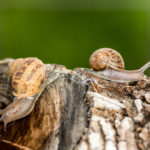
  • Getting to Know You – Introduction to Photography

    Getting to Know You – Introduction to Photography

    1. Getting to Know You – Introduction

    It’s time to familiarize yourself with your camera. You’re also going to get your first photo assignment! Approach a friend or family member and ask them for three random words from the top of their head. Pick the one you like best and take 5 photographs dealing with that subject. In order to get full points you will need to demonstrate the following:

    • A willingness to experiment. Shoot all 5 photos in “manual” mode and try out the camera’s controls. You’ll be hard-pressed to damage anything. Get creative and find out what things do. If you turn in photos that are too similar or are made with very similar camera settings, you’ll lose credit.
    • A willingness to work hard for your images. This doesn’t always mean walking a long way or lots of physical labor, but you need to put a lot of thought into your subject. Since this class is considered an art course, your solution must be creative and artistic. If your images look like a “snapshot,” re-shoot.

    It will be important in every assignment that your images are sharp and focused properly. If they are close, but not quite perfectly sharp, you should re-shoot. That’s a good rule of thumb: shoot and shoot again until you take a photo you are truly in love with. Turn in five Jpegs in a single .zip file as your final deliverable.

    This assignment is for Digital Photography course (ART 2060) at Dixie State University in St. George, Utah taught by Alex Chamberlain in the Fall of 2015.

  • Tutorials for learning and teaching photography

    Tutorials for learning and teaching photography

    We provide a plethora of photographs and imagery that will please your eyes and soul. We provide instruction and tutorials for photography and videography related software including:

    Photography tools

    • Adobe Lightroom
    • Adobe Photoshop
    • Stellarium
    • Nik Tools

    Video and videography tools

    • Adobe Premiere
    • Adobe After Effects

    We provide reviews and instruction for using photography equipment and techniques.

    We welcome all feedback, comments, and constructive criticism.