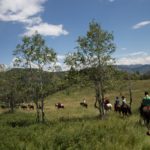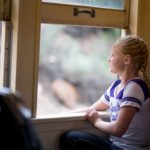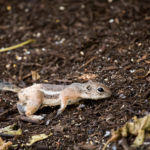
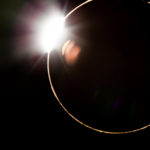
My son, Hudson, helped me create the first three photos with a stress ball. I shot the other of the actual 2017 lunar eclipse two in St. George, Utah.
Author: effulge
-
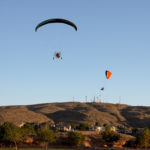
Ultralights and Paramotors in Flight
While traveling along the Mayor’s Loop we spotted some awesome aircraft about to take off. We stopped at the St. James park and watched them take off and fly through the sky. The man wearing the backpack (Jake flying a Blackhawk 125 cc paramotor) said it weighed about 40-50 pounds. He told us he has a pilot’s license and has flown planes before, but paramotors are his favorite way to fly.
We spoke to them (Jake and Craig) after they landed and they told us about their Youtube channel called St. George Paramotors. It has many excellent paramotor flight videos. They even made a chase cam for their GoPro.
-
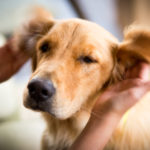
Benny’s Golden Ears
Benjamin “Benny” my parent’s golden retriever is one-year-old now. He is still digging holes and eating things he shouldn’t. Everyone he meets falls in love with him, and he loves the attention.
-
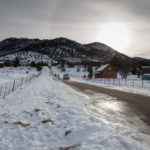
Icy Sledding Trip
We took a car trip to snow covered mountains nearby. Hiking a steep asphalt road with an icy crust left us laughing all the way down the hill. Pine Valley, Utah sits on the United States’ largest laccolith.
-
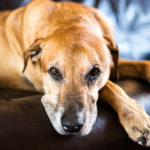
Stogie the Rhodesian Ridgeback
Meet Stogie, the mighty Rhodesian Ridgeback from Holladay, Utah. According to Wikipedia, “The Rhodesian ridgeback is a dog breed developed in Rhodesia, now Zimbabwe. Its European forebears can be traced to the early pioneers of the Cape Colony of southern Africa, who crossed their dogs with the semi-domesticated, ridged hunting dogs of the Khoikhoi.
The Rhodesian Ridgeback has also previously been known as Van Rooyen’s lion dog or the African lion hound or African lion dog—simba inja in Ndebele, shumba imbwa in Shona—because of its ability to keep a lion at bay while awaiting its master’s arrival to make the kill.
The original breed standard was drafted by F. R. Barnes, in Bulawayo, Southern Rhodesia (now Zimbabwe), in 1922. Based on that of the Dalmatian, the standard was approved by the South African Kennel Union in 1927.”
-
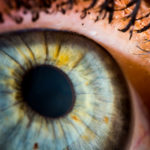
Your eyes are the windows to your soul
Shooting someone’s eye is very personal and requires much patience. Have a place for your model to rest their head or try to stabilize it. Try not to blink!
-
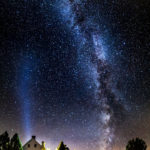
Into Darkness – Night Photography / Star Trails
4. Into Darkness
Due Thursday by 3:15 pm Points 100 Submitting a file upload File Types jpg New moon is Oct. 1st. That means you have a unique opportunity for a few days on either side of that date to photograph dark skies and stars. In the spirit of pre-visualizing, planning, and executing your photographs, your assignment is:
1. Find a landmark you’d like to photograph with stars and/or star trails behind it.
2. Download Stellarium from www.stellarium.org and use it to determine when you could photograph the milky way in the same composition as your chosen landmark.
3. Take your photographs (you’ll want to determine how to focus your lens to infinity in advance, so you don’t have to figure that out in the dark).
Your final deliverable will be two .jpg images. One should be exposed such that the stars are points in your photograph, as opposed to streaks. The second should be either a very long exposure to create star trails (probably at least a one hour exposure), or a series of star photos stacked to create star trails (this is usually the more pleasing approach. Again, you’d probably want the series exposed at regular intervals over the course of at least an hour).
Please be safe and don’t go anywhere dangerous or alone. Don’t trespass and don’t fail to bring adequate supplies for your comfort and safety (you’ll probably need a coat. . . what am I, your mother?).
Hint: You’ll probably need a remote shutter release for this assignment. These are available from online retailers such as Amazon for a few dollars.
Hint 2: You can check the clear night skies forecast here: http://www.cleardarksky.com/csk/
Hint 3: Here is a list of common “correct” exposure settings for common apertures while taking night sky shots:
f/1.4, ISO800 = 30s
f/2.8, ISO3200 = 30s
f/4.0, ISO6400 = 30s
f/5.6, ISO12800 = 30sHint 4: Here are four tutorials that can help you:
http://petapixel.com/2013/03/18/how-to-photograph-star-trails-from-start-to-finish/
http://petapixel.com/2013/04/25/a-complete-guide-to-star-trailing/
http://petapixel.com/2014/01/29/picking-great-lens-milky-way-photography/
https://www.youtube.com/watch?v=Rydg7JGTAbwHint 5: Make sure your batteries are fully charged.
This assignment is for Digital Photography course (ART 3040) at Dixie State University in St. George, Utah taught by Alex Chamberlain in the Fall of 2016.