

Hannah stared at her hot chocolate like it held the secret to the universe. — Lilith Saintcrow
Category: Children
-
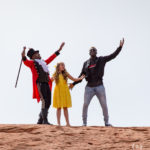
Alex Boyé at the Sugarloaf
My wife asked me to take some photos today for a school field trip. Luckily, the field trip was at Dixie Rock which is one of my favorite places to hike around and shoot photos. While they were up on the Sugarloaf shooting a music video, I hiked around and snapped some pictures of the event. After about an hour, I thought I heard someone repeatedly shouting my name. I thought I must be delirious from the sun, or the fact I didn’t eat breakfast. I kept hearing, “Joe Cowdell! Joe Cowdell!” Feeling anxious, I called my wife to double-check my sanity. She reassured me that it was Alex Boyé calling my name and that my daughter, just talked to him. I didn’t really know who he was before today, and I doubt I will forget this memorable day at the Sugarloaf.
# From Wikipedia #
Alex Boyé (born August 16, 1970) is a British-American singer and actor. He was named the “2017 Rising Artist of the Year” in a contest sponsored by Pepsi and Hard Rock Cafe. -

Something Impossible Part Deux with Photoshop
3. Something Impossible Part Deux
Now that you’ve experienced the purely analog side of special effects photography, you’re prepared to appreciate and enjoy the digital tools we have at our fingertips. Your assignment is similar to your previous one. Your final deliverable is the same: A RAW image, a processed JPG, and a conceptual sketch. However, this time you can use photoshop to manipulate your processed JPG beyond simple color correction. You can add and remove elements as you please. However:
You must not use photographic assets that you did not shoot.
You will be expected to stick more rigorously to your sketch concept (you have the advantage of photoshop, so your excuses for deviation are diminished).
While it’s something of a subjective matter, “Over-photoshopping” will hurt your grade. Your photo should look convincing and realistic.
As always, the rules of good photography apply. Make sure your photo is sharp, well-composed, and well-executed. Make sure your manipulations are seamless. This assignment should take approximately 10-15 hours of your time.
Example of a good project: http://petapixel.com/2011/11/22/how-to-make-a-photo-of-a-bouncing-baby/
Here’s another example: http://petapixel.com/2015/03/18/how-i-created-a-shot-of-myself-falling-in-the-kitchen-with-food-flying-everywhere/
-
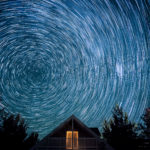
The Long Way Home – Intro to Night Photography
I took a photography course from Alex Chamberlain at Dixie State University in the Fall of 2015. This was my first “real” experience with night photography. Luckily, the city of Pine Valley, Utah has some of the darkest skies near my hometown of St. George, Utah. It is the perfect spot for me to practice my night photography. Night photography gives me an excuse to get away from it all and just listen to nature. Sometimes being alone with just a camera can be frightening, so I usually bring a friend.
5. The Long Way Home – Intro to Night Photography
Your assignment is to shoot 10 long exposures, ranging from 1 second to at least 10 minutes in length. Subject matter should include all of the following:
- Moving lights
- Stars
- People
This does not mean that all three elements must be in each image. Rather, you need images of all three of these things within the set you turn in.
Exposure lengths should be:
- 2 finished 1-second exposures
- 2 finished 5-second exposures
- 2 finished 10-second exposures
- 2 finished 30-second exposures
- 2 finished 10-minute exposures (these can be longer than 10 minutes if you’d like)
These should not be “drafts” or experiments. They should be finished, portfolio-quality pieces. The finished assignment calls for 10 images. You will probably need to take much more than that in the course of creating your images.
In order to expose longer than 30 seconds, most cameras must be in “bulb” mode, which means you press the shutter button to open the shutter and release it to close. Obviously, this can introduce some hand-transferred camera shake, so you will probably want to pick up a remote shutter release for your camera. These can be purchased from amazon.com for about $5-$10.
Note: October 13th is the new moon (the moon is not visible in the sky). That will be the best star-shooting day during the course of the assignment, but you should be able to find good shooting conditions within four days before or after that date.
Please don’t trespass or go anywhere crazy alone at night.
Your moving light shots cannot be taken around the Dixie Rock area.
Hint: You can check the clear night skies forecast here: http://www.cleardarksky.com/csk/
Hint 2: Here is a list of common “correct” exposure settings for common apertures while taking night sky shots:
- f/1.4, ISO800 = 30s
- f/2.8, ISO3200 = 30s
- f/4.0, ISO6400 = 30s
- f/5.6, ISO12800 = 30s
Hint 3: Make sure your batteries are fully charged.
This assignment is for Digital Photography course (ART 2060) at Dixie State University in St. George, Utah taught by Alex Chamberlain in the Fall of 2015.
-

Getting to Know You – Introduction to Photography
1. Getting to Know You – Introduction
It’s time to familiarize yourself with your camera. You’re also going to get your first photo assignment! Approach a friend or family member and ask them for three random words from the top of their head. Pick the one you like best and take 5 photographs dealing with that subject. In order to get full points you will need to demonstrate the following:
- A willingness to experiment. Shoot all 5 photos in “manual” mode and try out the camera’s controls. You’ll be hard-pressed to damage anything. Get creative and find out what things do. If you turn in photos that are too similar or are made with very similar camera settings, you’ll lose credit.
- A willingness to work hard for your images. This doesn’t always mean walking a long way or lots of physical labor, but you need to put a lot of thought into your subject. Since this class is considered an art course, your solution must be creative and artistic. If your images look like a “snapshot,” re-shoot.
It will be important in every assignment that your images are sharp and focused properly. If they are close, but not quite perfectly sharp, you should re-shoot. That’s a good rule of thumb: shoot and shoot again until you take a photo you are truly in love with. Turn in five Jpegs in a single .zip file as your final deliverable.
This assignment is for Digital Photography course (ART 2060) at Dixie State University in St. George, Utah taught by Alex Chamberlain in the Fall of 2015.