effulge creative

photography by Joseph K Cowdell

Tag: Utah

  • Saint George Art Museum in Black and White

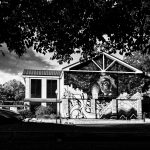
    Saint George Art Museum in Black and White

    Capturing the beautiful autumnal colors in black and white really changes the look. These photographs were captured near the St. George Art Museum.

    Photography 101 – Week 7 Assignment Requirements

    Make a series of images using the BW mode of your camera. Try some different BW settings that can be used with your camera (e.g., contrast, filter colors, etc.)  If you have image processing software that you feel comfortable exploring, shoot in JPEG and RAW, and compare the  JPEG image from the camera with your best BW interpretation using the software.

  • Eclipse Destress

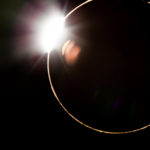
    Eclipse Destress

    My son, Hudson, helped me create the first three photos with a stress ball. I shot the other of the actual 2017 lunar eclipse two in St. George, Utah.

  • Rubber Rabbitbrush Milky Way

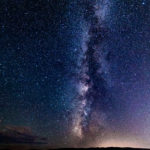
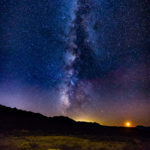
    Rubber Rabbitbrush Milky Way

    Rubber Rabbitbrush Milky Way with a setting moon.
    Captured near Central, Utah

  • The Epic of the Individual – Stranger Portrait

    The Epic of the Individual – Stranger Portrait

    1. The Epic of the Individual

    This is a warm-up. I believe that every human life is extraordinary if we have the patience to look. Further, among the key skills that a commercial photographer must have, is the ability to communicate and work with people. Your assignment is to take a portrait of a stranger. The final product is to include a caption with a quote from the subject that gives insight into their life and personality. The photo should also express the sentiments of the caption.

    For reference, see http://www.humansofnewyork.com

    As in every assignment, your images must be tack sharp unless there is a legitimate artistic reason for blurring. If your images are *almost* sharp. . . reshoot. This assignment should take several hours to complete at a minimum. Your final deliverable is just one photo, but you should have hundreds of candidates (probably of several different subjects) to choose from. Your best shot should be extraordinary. This is not just a picture of a person: this is an image of a human life. Treat it as sacred, precious, and worth your time. Make it interesting. This will be graded very strictly. On a more positive note, this has the potential to be one of the more enjoyable and rewarding assignments you’ll ever do. Have fun!

    Final deliverable: One, full-res photo with an equal-sized caption underneath in PDF or Jpg format.

    Disclaimer: Please be safe about this! Do not approach strangers alone or in isolated areas. Keep a buddy near you, or stay in safe, public locations.

    This assignment is for Digital Photography course (ART 3040) at Dixie State University in St. George, Utah taught by Alex Chamberlain in the Fall of 2016.

  • The Long Way Home – Intro to Night Photography

    The Long Way Home – Intro to Night Photography

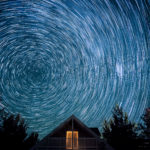
    I took a photography course from Alex Chamberlain at Dixie State University in the Fall of 2015. This was my first “real” experience with night photography. Luckily, the city of Pine Valley, Utah has some of the darkest skies near my hometown of St. George, Utah. It is the perfect spot for me to practice my night photography. Night photography gives me an excuse to get away from it all and just listen to nature. Sometimes being alone with just a camera can be frightening, so I usually bring a friend.

    5. The Long Way Home – Intro to Night Photography

    Your assignment is to shoot 10 long exposures, ranging from 1 second to at least 10 minutes in length. Subject matter should include all of the following:

    1. Moving lights
    2. Stars
    3. People

    This does not mean that all three elements must be in each image. Rather, you need images of all three of these things within the set you turn in.

    Exposure lengths should be:

    • 2 finished 1-second exposures
    • 2 finished 5-second exposures
    • 2 finished 10-second exposures
    • 2 finished 30-second exposures
    • 2 finished 10-minute exposures (these can be longer than 10 minutes if you’d like)

    These should not be “drafts” or experiments. They should be finished, portfolio-quality pieces. The finished assignment calls for 10 images. You will probably need to take much more than that in the course of creating your images.

    In order to expose longer than 30 seconds, most cameras must be in “bulb” mode, which means you press the shutter button to open the shutter and release it to close. Obviously, this can introduce some hand-transferred camera shake, so you will probably want to pick up a remote shutter release for your camera. These can be purchased from amazon.com for about $5-$10.

    Note: October 13th is the new moon (the moon is not visible in the sky). That will be the best star-shooting day during the course of the assignment, but you should be able to find good shooting conditions within four days before or after that date.

    Please don’t trespass or go anywhere crazy alone at night.

    Your moving light shots cannot be taken around the Dixie Rock area.

    Hint: You can check the clear night skies forecast here: http://www.cleardarksky.com/csk/

    Hint 2: Here is a list of common “correct” exposure settings for common apertures while taking night sky shots:

    • f/1.4, ISO800 = 30s
    • f/2.8, ISO3200 = 30s
    • f/4.0, ISO6400 = 30s
    • f/5.6, ISO12800 = 30s

    Hint 3: Make sure your batteries are fully charged.

    This assignment is for Digital Photography course (ART 2060) at Dixie State University in St. George, Utah taught by Alex Chamberlain in the Fall of 2015.