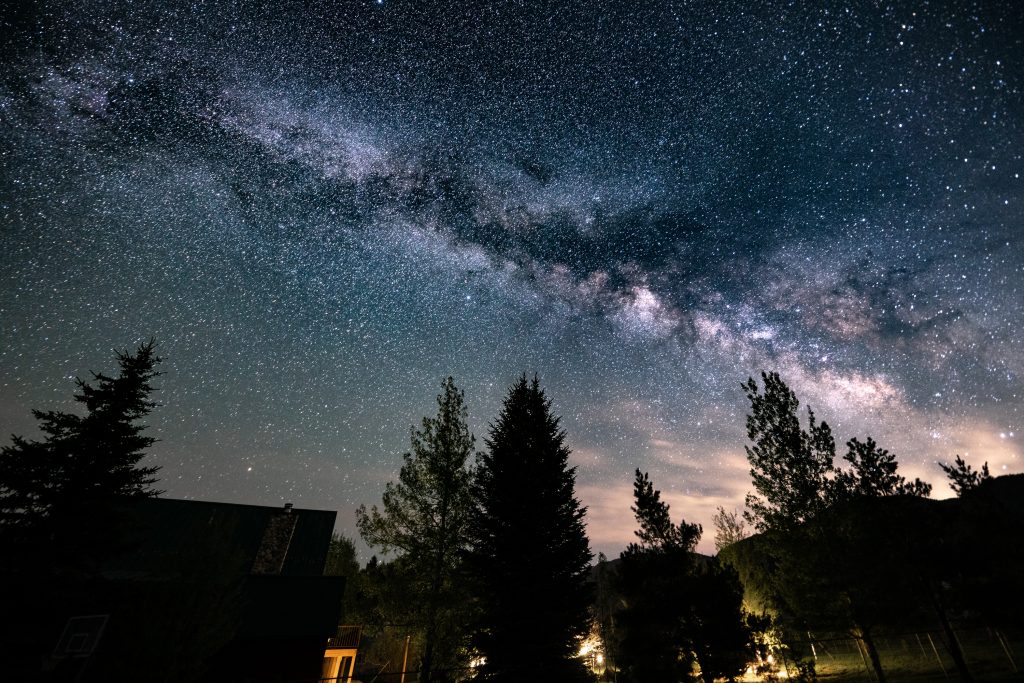
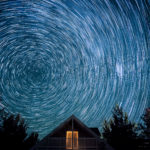
I took a photography course from Alex Chamberlain at Dixie State University in the Fall of 2015. This was my first “real” experience with night photography. Luckily, the city of Pine Valley, Utah has some of the darkest skies near my hometown of St. George, Utah. It is the perfect spot for me to practice my night photography. Night photography gives me an excuse to get away from it all and just listen to nature. Sometimes being alone with just a camera can be frightening, so I usually bring a friend.
5. The Long Way Home – Intro to Night Photography
Your assignment is to shoot 10 long exposures, ranging from 1 second to at least 10 minutes in length. Subject matter should include all of the following:
- Moving lights
- Stars
- People
This does not mean that all three elements must be in each image. Rather, you need images of all three of these things within the set you turn in.
Exposure lengths should be:
- 2 finished 1-second exposures
- 2 finished 5-second exposures
- 2 finished 10-second exposures
- 2 finished 30-second exposures
- 2 finished 10-minute exposures (these can be longer than 10 minutes if you’d like)
These should not be “drafts” or experiments. They should be finished, portfolio-quality pieces. The finished assignment calls for 10 images. You will probably need to take much more than that in the course of creating your images.
In order to expose longer than 30 seconds, most cameras must be in “bulb” mode, which means you press the shutter button to open the shutter and release it to close. Obviously, this can introduce some hand-transferred camera shake, so you will probably want to pick up a remote shutter release for your camera. These can be purchased from amazon.com for about $5-$10.
Note: October 13th is the new moon (the moon is not visible in the sky). That will be the best star-shooting day during the course of the assignment, but you should be able to find good shooting conditions within four days before or after that date.
Please don’t trespass or go anywhere crazy alone at night.
Your moving light shots cannot be taken around the Dixie Rock area.
Hint: You can check the clear night skies forecast here: http://www.cleardarksky.com/csk/
Hint 2: Here is a list of common “correct” exposure settings for common apertures while taking night sky shots:
- f/1.4, ISO800 = 30s
- f/2.8, ISO3200 = 30s
- f/4.0, ISO6400 = 30s
- f/5.6, ISO12800 = 30s
Hint 3: Make sure your batteries are fully charged.
This assignment is for Digital Photography course (ART 2060) at Dixie State University in St. George, Utah taught by Alex Chamberlain in the Fall of 2015.